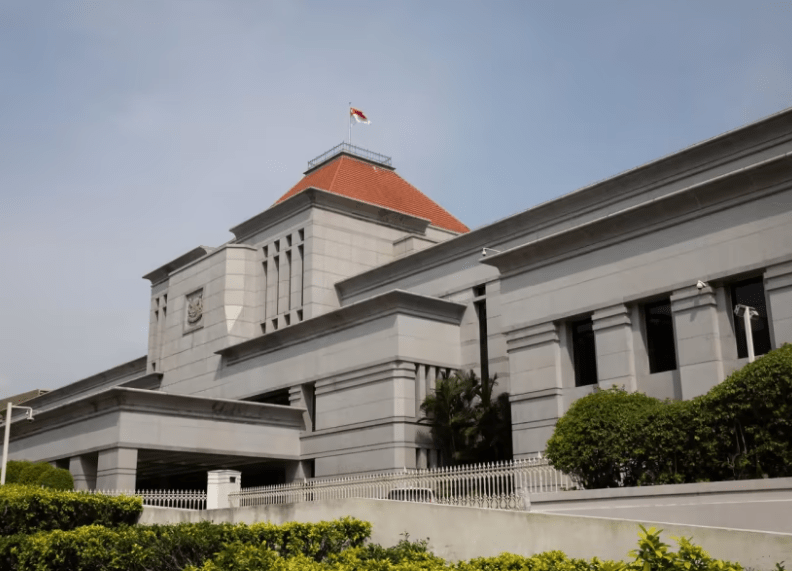

Remember this situation?
Presidential Election 2023 was the first time I was allowed to vote. As a political science student, I found this experience quite exciting.
Finally I can be part of my country’s democratic system. And I can make a difference . That’s the optimistic part.
| YEAR 2023 | Total Electors : 2,709,407 |
| Candidates | Total Votes |
| Tharman Shanmugaratnam | 1,749,261 (70.41%) |
| Ng Kok Song | 390,636 (15.72%) |
| Tan Kin Lian | 344,584 (13.87%) |
YEAR 2023 Presidential Elections Results [ELD,2023]
The reality of voting in Singapore is quite start. The voter base do not vote based on party affiliation and political beliefs. Its all about credentials and track record.
Singaporean Elections: A Reflection of Valence Politics
Singapore’s elections are often lauded for their efficiency and high voter turnout. However, beneath the surface lies an intriguing characteristic of its political landscape: the dominance of valence politics. This phenomenon helps explain the electoral success of the People’s Action Party (PAP) and the challenges faced by opposition parties seeking to gain traction in an overwhelmingly PAP-centric system.
What Is Valence Politics?
Valence politics refers to the focus on universally agreed-upon goals, such as economic growth, efficient governance, and national security, rather than divisive ideological or policy debates.
Unlike positional politics, where parties differentiate themselves based on competing visions, valence politics emphasizes competence, trustworthiness, and the ability to deliver results.
In Singapore, valence politics plays a significant role in shaping voter behavior.
The PAP’s reputation for effective governance, economic prosperity, and social stability aligns with these valence issues, creating a powerful narrative that has kept them in power since independence.
The PAP’s Mastery of Valence Politics
The PAP has successfully positioned itself as the guardian of Singapore’s success. Its branding as a party of technocratic excellence resonates with a populace that values stability and progress.
Key achievements, such as transforming Singapore from a third-world country into a global economic hub, reinforce the PAP’s image as the most competent party to lead the nation.
Policies such as housing, healthcare, and education reforms are framed not just as solutions but as reflections of the PAP’s ability to deliver on promises. Voters tend to reward such competence, sidelining ideological differences or alternative visions offered by opposition parties.
Singapore’s credentialism perpetuates political inequality through its emphasis on valence politics. Valence politics refers to the main topic of political groups being set on fixing “valence issues”, issues which concern the social and economic well-being of the country. This creates competition in demonstrating competency instead of approach and ideology (Oliver & Ostwald, 2018).
People’s Action Party (PAP) employs this to demonstrate political legitimacy. They focus on the party’s track record in delivering economic growth and stability, emphasising competence over ideology or approach. Given that PAP operates in a state setting where vast state resources are available to them, they utilise these to better deliver local services than the opposition (such as delivering services more efficiently and responding more quickly to locals’ requests) and take credit for past state achievements (Oliver & Ostwald, 2018).
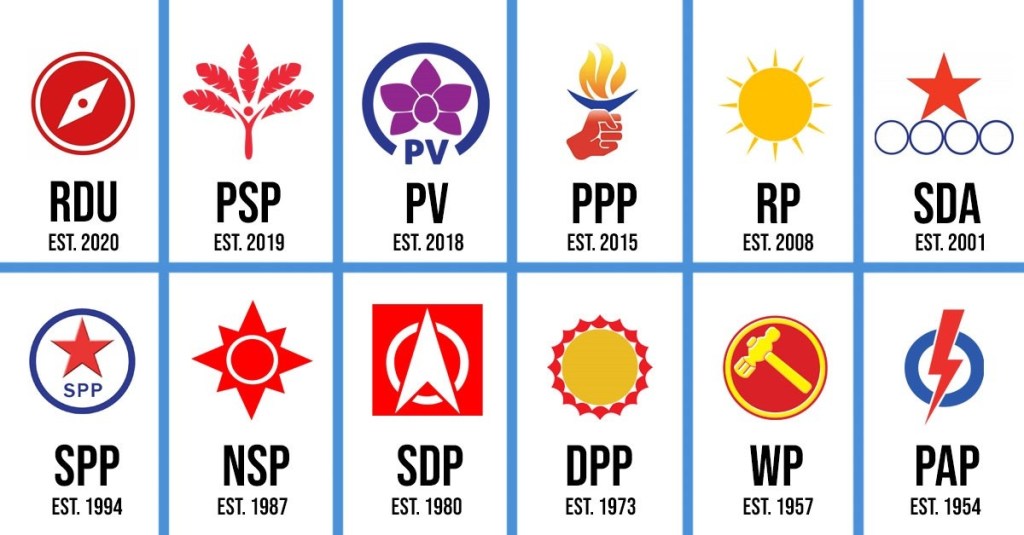
Challenges for Opposition Parties
Opposition parties in Singapore face an uphill battle in a valence-driven electoral system. To gain ground, they must convince voters that they can match or exceed the PAP’s record of governance. However, this is no easy task when the ruling party’s track record is often perceived as unassailable.
Opposition parties have minimal opportunities to demonstrate a similar track record and have fewer resources at their disposal (Oliver & Ostwald, 2018).
As a result of this asymmetric access to resources, the opposition is perceived as less capable, regardless of their actual policies or potential (Oliver & Ostwald, 2018). This unequal treatment of the incumbent compared to opposition Members of Parliament (MPs) further entrenches political inequality in a climate heavily focused on competence.
Opposition leaders have tried to address this by emphasizing their commitment to parliamentary accountability and presenting themselves as a check on PAP dominance. While this strategy has garnered some support, it remains insufficient to overcome the PAP’s stronghold on valence issues.
The Risks of Valence Politics
While valence politics has contributed to Singapore’s stability, it also comes with risks. A focus on competence over ideology can stifle diversity in political discourse. Key issues such as income inequality, housing affordability, and sustainability may not receive the critical debate they deserve if all parties converge on the same valence concerns.
Moreover, the lack of ideological differentiation risks alienating voters who seek alternative visions for the nation. Over time, this could lead to political apathy, especially among younger, more ideologically diverse demographics.

In the lead up to GE 2011, PAP implemented liberal pro-immigration policies to attract talent (in knowledge-based sectors) and address manpower shortages in blue-collared jobs in a bid to promote economic growth (Rodan, 2019). However, they failed to address Singaporean sentiments and fears arising from these policies.
These included “heavy dependence on foreign workers and immigrants which many voters regarded as a strain on social and physical infrastructure and a threat to social cohesion” (Rodan, 2019), as well as a slew of other concerns regarding welfare, housing, transport, health, education, pensions and wages (Rodan, 2019).
Growing scepticism around PAP’s technocratic policies and approach was strongly signalled in the election results – a combined drop in PAP support in the 2006 and 2011 elections was 15%, with 60.1% support for the PAP at the May 2011 General Election being the lowest for the ruling party since independence in 1965 (Rodan, 2019).
In recognition of the drawbacks to their technocratic approach, PAP created Our Singapore Conversation (OSC), a mode of consultative representation, in October 2012.
Its aim was to demonstrate consideration of a wider range of population views in policymaking, marking a shift away from a strict technocratic approach.
Yet, opposition and non-affiliated non-governmental organisation (NGO) suggestions were eschewed in favour of suggestions put forth by neutral organisations or those affiliated to the PAP (Rodan, 2019).
Moreover, the PAP cited citizen feedback from the OSC as the foundation for new policy decisions without substantiating with specific evidence.
While dubious, this quelled criticism about the PAP’s lack of consideration of local views.
It also created the perception that supporting the PAP and its consultative representation institutions could provide results more efficiently than supporting opposition parties (Rodan, 2019).
Clearly, in spite of criticism, PAP maintained a paternalistic, technocratic approach and neglected representing the policy suggestions that differed from the PAP. They also utilized consultative representation sessions to reinforce their legitimacy and cast doubt on the effectiveness of the opposition.
Moving Forward: A More Nuanced Approach
To maintain its relevance in a changing society, Singapore’s political landscape must evolve beyond valence politics.

Opposition parties could focus on carving out distinctive niches that address emerging concerns, such as climate change, social justice, and digital transformation.
Meanwhile, the PAP could diversify its narrative to engage voters on a broader range of issues beyond its track record of competence.
Valence politics has undoubtedly shaped Singapore’s electoral outcomes. But for a maturing democracy, fostering a balance between competence and ideological debate is essential. Only then can Singapore ensure a vibrant and inclusive political future.
What do you think about the role of valence politics in Singapore? Share your thoughts in the comments!
Reference List
ELD. (2023). Presidential election results. https://www.eld.gov.sg/elections_past_results_presidential.html
Oliver, S., & Ostwald, K. (2018). Explaining elections in singapore: Dominant party resilience and valence politics. Journal of East Asian Studies, 18(2), 129–156. https://www.jstor.org/stable/26856297
Rodan, G. ‘Inequality and Political Representation in the Philippines and Singapore’. Journal of Contemporary Asia, vol. 51, no. 2, Mar. 2021, pp. 233–61. DOI.org (Crossref), https://doi.org/10.1080/00472336.2019.1607531.