Introduction

Singapore’s Ambassador to the UN once stated, “There is no poverty in Singapore,” but this claim is misleading. While Singapore does not have an official poverty line, studies and reports indicate that poverty does exist. A 2018 study by the Lee Kuan Yew School of Public Policy found that 10–14% of households lived in relative poverty, earning less than half of the median household income.
Singapore’s high Gini coefficient also reflects significant income inequality, which persists despite government assistance programs such as ComCare and Workfare.
Additionally, visible signs of poverty, such as elderly individuals doing manual labor and families relying on rental housing, suggest financial hardship among certain segments of the population. Though Singapore has extensive social support measures, the claim that poverty does not exist overlooks the struggles of low-income groups in an otherwise affluent nation.
Poverty in Singapore

Figures Unknown but aggregate (8% – 12%)
Singapore does not have an official poverty line, however, studies these 3 studies suggest a rough figure around 12%.
Poverty rate estimates
- A 2018 study by the National University of Singapore found that 12% of households in Singapore live in poverty.
- A 2020 study by the NUS Social Service Research Centre estimated that 12.46% of households in Singapore live in absolute poverty.
- Researchers estimate that 387,000 Singaporeans are unable to meet basic needs.
Welfare Policies in Singapore
Singapore’s welfare system is not in a traditional sense like welfare systems from other nations. A somewhat social protection system. Singapore’s social programs are primarily based around 4 main items : Housing, Healthcare, Retirement and WorkFare income supplement.

The Singapore welfare system is structured around multiple layers, primarily focusing on asset building through the Central Provident Fund (CPF), with key pillars including affordable housing (HDB flats), healthcare, education, and employment support, all built on the principle of individual self-reliance and family support as the first line of defense; this includes targeted assistance programs for low-income individuals through schemes like Workfare Income Supplement, with the government providing additional support when needed.
Fieldwork Reporting
On the 1st of March 2025, I followed a couple of faculty members from the School of Social Sciences in Singapore Management University to study poverty and sustainability.
MRT : Lavender
Block 804, 805, 806
MP : Denise Phua
Why Being Poor Is Expensive
You’ve probably heard the phrase, “Being poor is expensive.” It sounds contradictory, but it couldn’t be more true. When you’re living paycheck to paycheck, the cost of basic necessities—food, housing, transportation—often ends up being disproportionately high.
Take grocery shopping, for example. In theory, buying in bulk is the smart financial move. The price per unit is lower, and in the long run, you save money. But what if you only have $5 to spend? You can’t afford to buy the larger, cheaper pack—you’re stuck paying more per unit for the smaller one. This cycle repeats across almost every aspect of life, from relying on high-interest payday loans to being unable to afford upfront costs for things that would save money down the road.
Without the ability to save or a significant increase in income, people in poverty are often trapped in this cycle, forced to make choices that are financially inefficient simply because they don’t have the means to do otherwise. The system punishes those who have the least, making it harder to break free. That’s why being poor is, ironically, so expensive.
Grocery Drives are moderately beneficial
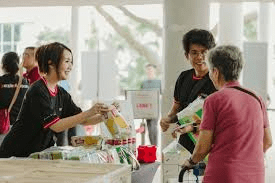
When we were walking around observing the neighbourhood we noticed an event happening in the community centre. (Around 12pm to 2pm) This event was sponsored by DBS Foundation and I observed some people in uniform resembling Sheng Siong employees unloading the groceries from company trucks.
These drives are good for the community and politically, its good PR for the PAP. However, I can’t help but notice some of the items being given out are sometimes not appropriate for them. Most of the items given out are long lasting products. Detergent, Toilet Paper, Instant Noodles, Canned goods etc.
The quality of items given is on paper is good. However, lack of fresh produce and other items hinder the ability for households to produce good quality and nutritious meals.
In reference to a household with children, this would undoubtedly have negative effect on a child’s brain development and overall physical health, resulting in higher rates of hypertension, blood pressure and obesity.
2. There are two Singapore

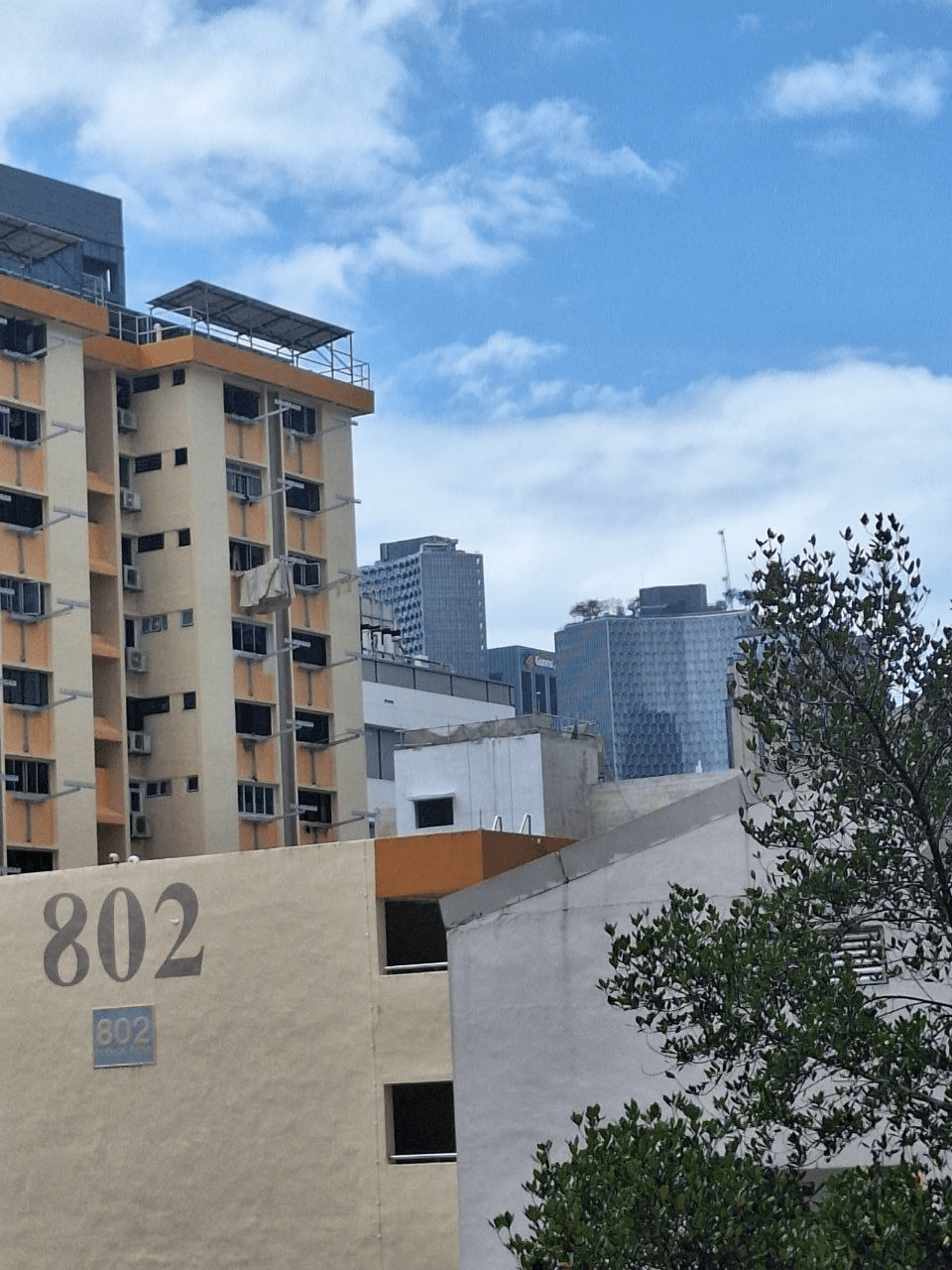
This picture I took summed up the experience. Tucked away block 804, 805, 806 stand quietly within the neighbourhood but just through the skyline, you can see the bustling financial centre within the heart of Singapore city.
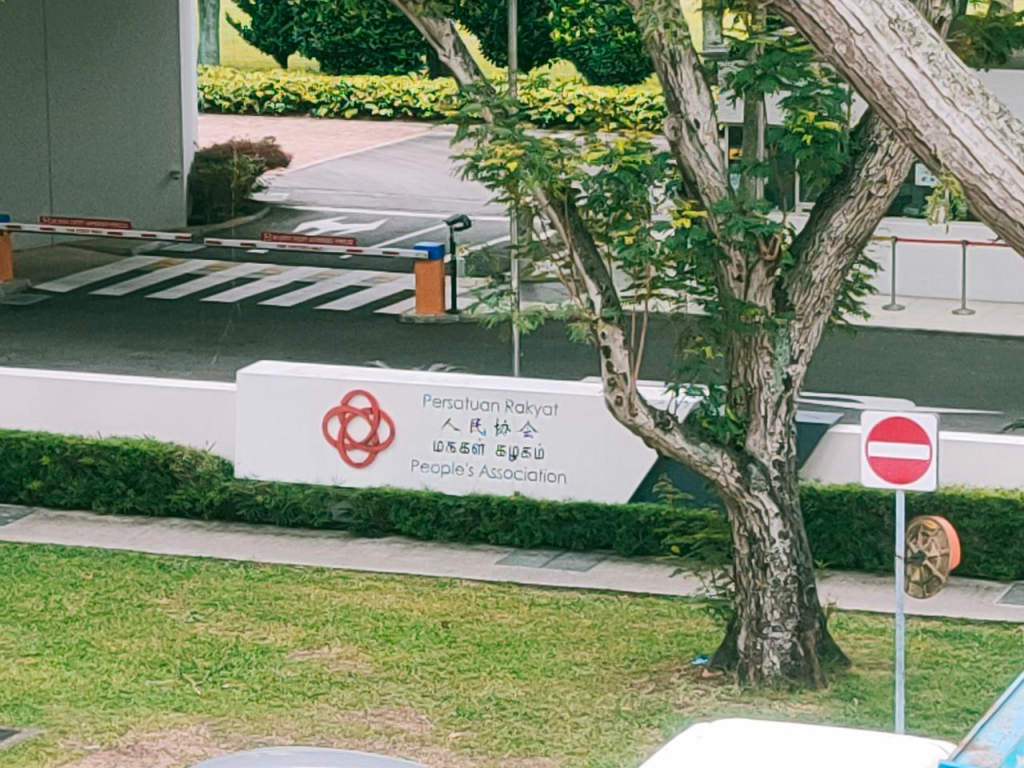
Just across the street, is the People’s Associations a shiny complex. Another side, a 30 story HDB being built, and surrounded by ICA, private boutique hotels and many other touristy attractions.
Poverty in Singapore, is deliberately well hidden and you need to look and observe more closely to find them.
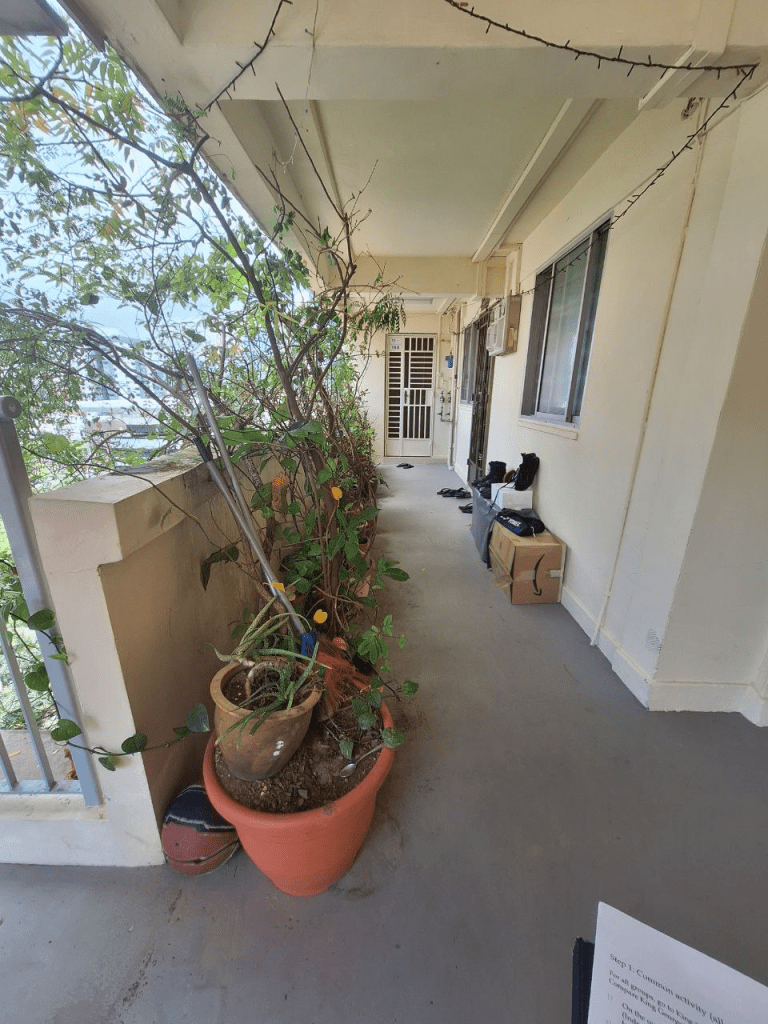
When we reached this particular floor, a resident avoided the gaze of my collegue and didnt want to get into the elevator with us. Seeing as we look like government social workers, they have and would have been interviewed countless times and asked for opinions on how they need help.
I wonder if, at some point, that it was degrading towards these residents. But from the government point of view, this is possibly one of the few ways they can stay in contact with these residents and try to offer some assistance even if they don’t want the help.

This study area was quite ironic. A study corner with no tables? How should you study? The fans available were quite derelict and old. This place was far under – utilised and sad. Put some tables in at least.
Another interesting observation was the lack of children. In hour 2 hour stint around the neighbourhood, I saw only around 4 – 5 children. A stark contrast to the majority of seniors sitting around the coffeeshops.
Requirements to Own a rental flat
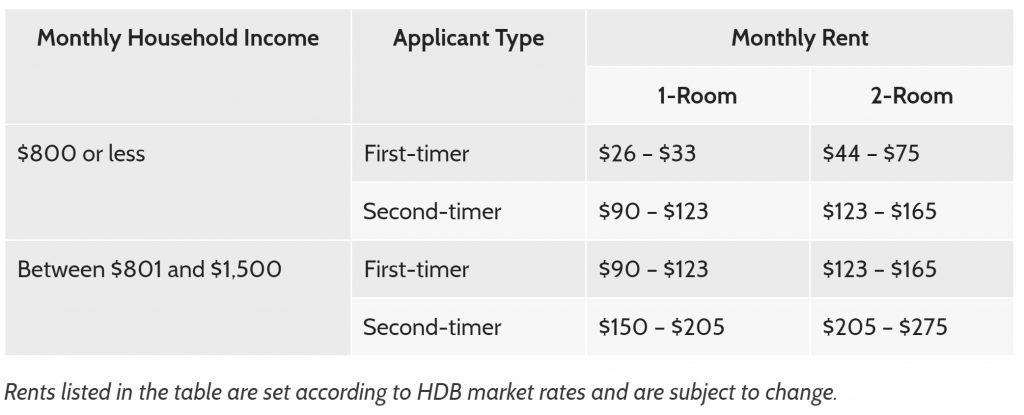
BLK 804, 805, 806 are all rental flats. However, speaking to some residents, some of the rental flats have been empty for years. A fellow master’s student remarked that there was a long waiting list for rental flats like these. However, I cant confirm the validitity of that statement but it makes sense. Knowing the cost of housing is so high in Singapore, these rental flats are the only chance of housing they can get. Yet many of these are empty.
Conclusion
This experience was an eye opening one. Poverty is so well hidden within Singapore, that I, a privileged middle class, student did not understand or seek till I looked closer. I’m not sure what I as an individual am able to contribute but this is my piece, at least spread awareness about the hidden within Singapore.