In Singapore’s tightly controlled political landscape, the Singapore Democratic Party (SDP) has long positioned itself as a vocal challenger to the ruling People’s Action Party (PAP).

Founded in 1980, the SDP has undergone significant transformations—from a moderate opposition party under its early leadership to a more assertive and policy-driven force under Dr. Chee Soon Juan. Despite electoral setbacks, the SDP has remained steadfast in its advocacy for civil liberties, democratic reforms, and social justice.
But what exactly does the SDP stand for today? How has it shaped political discourse in Singapore, and what challenges does it face in an environment where opposition voices struggle to gain traction? This post will provide some back on the Singapore Democratic Party strategy in the upcoming GE2025.
Historical Legacy

The Singapore Democratic Party (SDP) was founded in 1980 by Chiam See Tong, who sought to provide a credible opposition to the People’s Action Party (PAP) through parliamentary participation and policy advocacy.
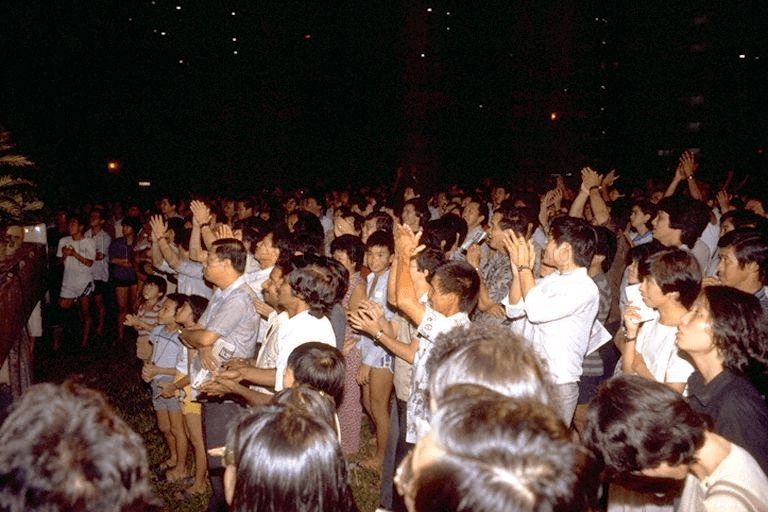
Under Chiam’s leadership, the SDP gained its first electoral breakthrough in 1984 when he won the Potong Pasir seat, marking a significant moment in Singapore’s opposition politics. However, internal conflicts in the 1990s led to Chiam’s departure, after which Dr. Chee Soon Juan took over leadership.
Under Chee, the SDP shifted towards a more confrontational approach, emphasizing human rights, democracy, and political freedoms—positions that often put it at odds with the government.

Over the years, the SDP has faced legal and political challenges, including defamation lawsuits and restrictions on political activities, yet it has remained one of Singapore’s most persistent opposition parties.

While it has not won a parliamentary seat since 1997, the party continues to influence political discourse through its policy proposals and grassroots activism, cementing its legacy as a steadfast advocate for democratic principles in Singapore.
Personality Politics
Chee Soon Juan

Dr. Chee Soon Juan is one of Singapore’s most well-known and controversial opposition politicians, serving as the Secretary-General of the Singapore Democratic Party (SDP) since 1993.
A former academic with a background in neuropsychology, Chee entered politics in the early 1990s and quickly became a vocal critic of the ruling People’s Action Party (PAP), advocating for democracy, human rights, and greater political freedoms.

His confrontational style and willingness to challenge the government led to multiple legal battles, bankruptcy, and even imprisonment, making him both a symbol of resistance and a polarizing figure in Singapore’s political landscape.
Over the years, Dr Chee’s confrontation on topics has mellowed down, from huge political national issues such as Human Rights and Capitalism. To more local issues like specific infrastructural nit picks within the now defunct Bukit Batok SMC. This move is greatly welcomed as his message now seems more personable and better received by voters.

Despite these challenges, Chee has remained persistent, reshaping the SDP into a policy-driven party while continuing to push for a more open and competitive political system in Singapore. For General Election 2025, Dr Chee will be contesting in Sembawang West SMC.
In my own opinion, it is unlikely that Dr Chee would be able to secure Sembawang West SMC due to multiple factors. The Gerrymandering and
Paul Anantharajah Tambyah

Professor Paul Anantharajah Tambyah is a prominent Singaporean infectious disease expert and opposition politician, serving as the Chairman of the Singapore Democratic Party (SDP) since 2017.
A respected medical professor and researcher, Tambyah is known for his expertise in public health and his advocacy for evidence-based policymaking.

Unlike many opposition figures who take a more confrontational approach, he has built a reputation for his measured and pragmatic stance on governance, particularly in areas such as healthcare and social welfare.
His entry into politics brought credibility to the SDP, reinforcing its focus on policy-driven opposition. During the COVID-19 pandemic, his insights into public health policy gained national attention, positioning him as a key voice in Singapore’s political landscape.
SDP Northern Strategy
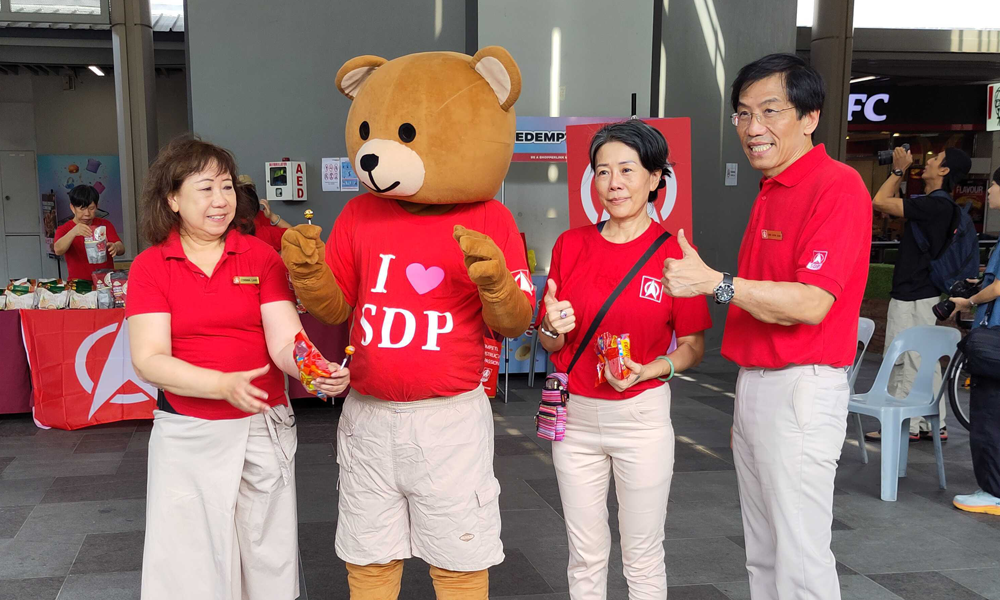
The Singapore Democratic Party (SDP) has adopted what is sometimes referred to as its “Northern Strategy,” a political approach focused on contesting constituencies in Singapore’s northern regions, particularly in areas like Marsiling-Yew Tee GRC, Sembawang GRC, and Bukit Panjang SMC.
This strategy is based on the recognition that these areas have a strong mix of middle- and lower-income voters, as well as a sizable number of public housing residents—demographics that may be more receptive to the SDP’s policies on social justice, healthcare, and income inequality.
A key part of this strategy was the SDP’s efforts in Marsiling-Yew Tee GRC during the 2015 and 2020 General Elections, where it positioned itself as the main opposition challenger.
The party also contested Bukit Panjang SMC, where Dr. Paul Tambyah ran a strong campaign in 2020, narrowly losing to the PAP candidate.
By repeatedly contesting these areas, building grassroots networks, and addressing local issues, the SDP aims to establish a foothold in the northern constituencies, similar to how the Workers’ Party built its base in the east.
While the strategy has yet to translate into electoral victory, it reflects the SDP’s long-term commitment to gaining parliamentary representation.
With current prime minister Lawrence Wong heading Marsiling – Yew Tee GRC, it is unlikely that the SDP team there will be able to overthrow him. However, there is a strong possibility of a higher number of opposition voters which might set the precedence and a strong indicator for PM Wong’s mandate as prime minister.