In a surprising turn of events on Nomination Day for Singapore’s General Election 2025, the Workers’ Party (WP) did not field a team to contest the newly formed Marine Parade-Braddell Heights GRC. This decision resulted in a walkover for the People’s Action Party (PAP) in the constituency, marking the first walkover in a GRC since 2011. The move has drawn significant attention and discussion, particularly given the WP’s previous engagement and performance in the Marine Parade area in past elections.
The WP had contested Marine Parade GRC in both the 2015 and 2020 general elections, demonstrating a consistent effort to gain ground in the constituency. In GE2020, the party garnered a respectable 42.26% of the vote in Marine Parade GRC, indicating a notable level of support. Their absence in GE2025, especially after years of walkabouts and outreach efforts, has understandably raised questions and elicited reactions from variousЕ quarters.
Several opposition parties have publicly expressed their disappointment and surprise regarding the WP’s decision. Some had anticipated a multi-cornered fight in Marine Parade-Braddell Heights GRC and felt that the WP’s withdrawal deprived residents of a contest and a choice at the ballot box. Criticisms have been voiced about the strategic implications of the decision for the broader opposition landscape.
In response to the reactions and the public’s queries, WP chief Pritam Singh addressed the matter, describing it as a “very difficult decision” for the party. He cited changes in electoral boundaries, with parts of the former Marine Parade GRC being redrawn into the new Marine Parade-Braddell Heights GRC and other surrounding constituencies, as a factor. More significantly, Mr. Singh indicated that the decision was a strategic one, aimed at concentrating the party’s limited resources on a smaller number of constituencies where they believe they have the best chance of electoral success.
The WP is contesting a total of 26 candidates across five GRCs (Aljunied, East Coast, Punggol, Sengkang, and Tampines) and three Single Member Constituencies (Hougang, Jalan Kayu, and Tampines Changkat) in GE2025. The party’s leadership has emphasized the need to focus their efforts to maximize their impact in the elections.
While the decision not to contest Marine Parade-Braddell Heights GRC in this election means residents there will not have an opportunity to vote for a WP team, Mr. Singh has stated that the party intends to resume its outreach efforts in the constituency after the general election. This suggests that the WP may view this as a temporary withdrawal rather than a permanent abandonment of their interest in the area.
The WP’s strategic choices in this election highlight the complexities faced by opposition parties in Singapore’s political landscape, particularly concerning resource allocation and identifying winnable constituencies. While their absence in Marine Parade-Braddell Heights GRC is a notable development, the party’s focus is now clearly on the constituencies they are contesting, aiming to secure mandates and continue to be a robust voice in Parliament. The GE2025 results will ultimately provide a clearer picture of the impact of these strategic decisions.
The Shadow of Gerrymandering
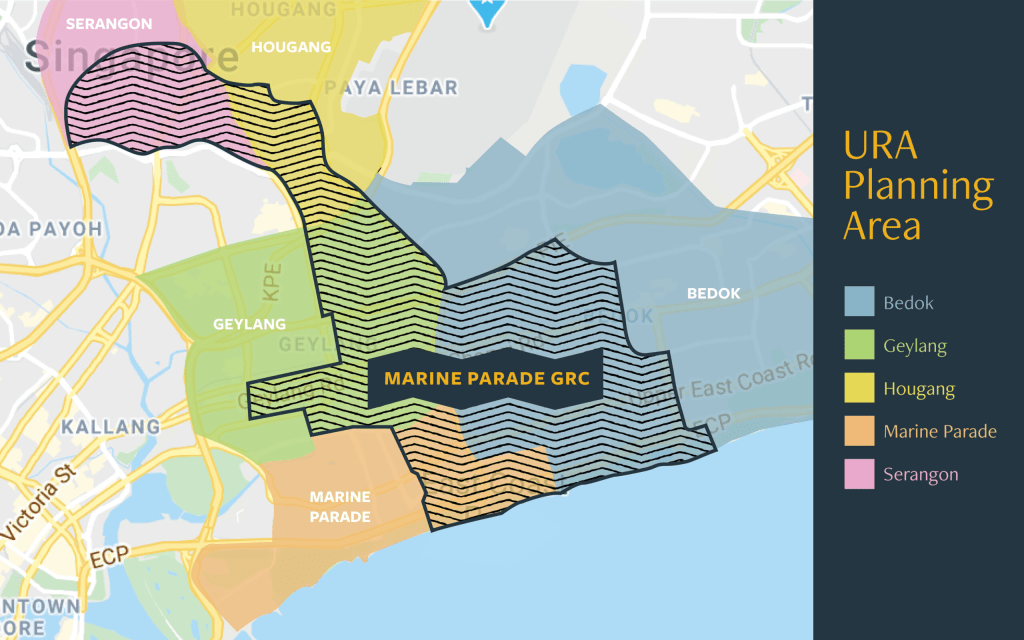
The redrawing of electoral boundaries by the Electoral Boundaries Review Committee (EBRC) in Singapore is a process that often draws scrutiny and has, at times, led to accusations of gerrymandering from opposition parties. Gerrymandering refers to the manipulation of electoral district boundaries to favor one party or group over another.
Leading up to GE2025, the EBRC released its report detailing the revised electoral map, which saw significant changes to the boundaries of many constituencies, including the formation of Marine Parade-Braddell Heights GRC from parts of the former Marine Parade GRC, MacPherson SMC, and portions of Mountbatten and Potong Pasir SMCs. The stated reason for these changes by the EBRC and the government is to account for demographic shifts, population growth, and new housing developments across the island.
However, opposition parties have voiced concerns about the extent and nature of these boundary revisions. Some have argued that the lack of transparency in the EBRC’s deliberations and the timing of the report’s release, often close to the Над General Election, make it difficult to fully understand the rationale behind specific changes. The significant redrawing of boundaries in constituencies that saw close contests in previous elections, such as the former Marine Parade GRC, has fueled speculation and concerns about potential gerrymandering aimed at diluting the support base of opposition parties.
The government has consistently rejected claims of gerrymandering, asserting that the EBRC is an independent body composed of senior civil servants who make recommendations based on objective factors like population changes. They maintain that the process is necessary to ensure that electoral divisions have roughly equal numbers of voters and that MPs can effectively serve their constituents.
Despite these assurances, the perception of gerrymandering persists among some segments of the population and political observers. The substantial changes to the electoral map, including those affecting the constituency previously known as Marine Parade GRC, remain a point of contention and a backdrop against which the strategic decisions of parties like the Workers’ Party are made in the lead-up to the general election. The debate over whether the boundary changes are purely administrative or politically motivated is likely to continue to be a feature of Singapore’s political discourse.